
An Elysium London Essay Series: arguments from the space between communities and institutions, on who holds power in UK health inequalities research and how to shift it.
About 12 minutes to readFormerly Reflections from the Interspace
There is a difference between community research and communities doing research. In community research, communities lead and own the research. In communities doing research, they collect data on someone else’s behalf. I reviewed 25 London-based community and peer research reports, found through public searches and published between 2022 and 2026. Twenty-one named at least some of the community researchers. Only two named them as authors. Community researchers are in the reports but rarely on the cover, and that shows where the power sits.
This matters now because power over communities’ futures is being handed out at scale. Pride in Place is putting up to £5.8 billion into 284 communities across the UK, and the government says “communities are in charge of plans for this investment”. In London, the new NIHR Applied Research Collaboration, backed by £22 million, has committed to “embedding inclusive approaches across all projects and programmes”. Whether communities hold that power, or are asked to share someone else’s, will decide what this cycle of investment changes.
I write this from inside the work, having started as a community researcher in Brixton in 2020. Six years in, these are the beliefs I hold:
- Communities already have power of their own.
- Community research is how they claim power in research and the systems around it.
- That power has to be claimed, because the infrastructure around research is not designed to share it.
- Keeping that power takes infrastructure that holds when the funding ends.
These beliefs stand on two traditions that have argued about power in research for more than half a century.
The foundations
Critical pedagogy
Critical pedagogy begins with Paulo Freire, a Brazilian educator whose Pedagogy of the Oppressed (1970) argued that the people usually studied should take part in research as “co-investigators”, and that interpreting what is found is “both a right to which they are entitled and an indispensable aid”. In a 1982 essay he went further: the silenced are “the masters of inquiry into the underlying causes of the events in their world”. And he argued that liberation cannot be handed down by those in power. Help that leaves an unjust order in place is what he called false generosity.
Community-based participatory research
Community-based participatory research (CBPR) took shape in US public health in the 1990s, drawing on Freire’s tradition and Kurt Lewin’s action research, as Nina Wallerstein and Bonnie Duran trace it. Barbara Israel and colleagues set out its principles: partners “share control over all phases of the research process”, and research brings “the reciprocal transfer of knowledge, skills, capacity, and power”. It also asks researchers to be honest about where power sits at the start, which Wallerstein and Duran describe as unpacking “the role of power and privilege in the research relationship”.
communities should control the inquiry into their own lives and decide what it means, and that power is won by them, never handed down.
power has to be shared at every stage of the research, beginning with honesty about the power researchers already bring into the room.
Both traditions still shape community and participatory research in the UK, and both put power at its centre: communities should decide what is asked and what the answers mean. Where they part is how that power moves. CBPR asks researchers to share it. Critical pedagogy says it has to be won. The difference matters. Power that is shared can be taken back by whoever shared it. Power that is claimed belongs to the people who claimed it, and that decides how much say communities have over the research, and whether they still have it when the funding ends.
Sharing, holding and claiming power
Sherry Arnstein’s ladder of citizen participation, published in 1969 and still the reference point for involvement work, provides the language for that distinction. Her warning was that “participation without redistribution of power is an empty and frustrating process for the powerless”. Read against her ladder, sharing, holding and claiming power are three distinct positions.
- 8Citizen controlHolding
- 7Delegated power
- 6PartnershipSharing
- 5Placation
- 4Consultation
- 3Informing
- 2Therapy
- 1Manipulation
- Sharing is what she calls partnership, where “power is in fact redistributed through negotiation between citizens and powerholders”. It works most effectively, she found, when communities have “an organized power-base”, the money to pay their own leaders and the resources “to hire (and fire)” their own experts.
- Holding sits at the top of the ladder, where “citizens hold the significant cards” and can be “in full charge of policy and managerial aspects”.
- Claiming is how communities get there. She found that “in most cases where power has come to be shared it was taken by the citizens, not given by the city”.
Co-production is the main way UK health research sets out to share power, and NIHR describes it as “sharing power and responsibility from the start to the end of the project”. The evidence shows what happens in practice. A 2024 systematic review of co-produced mental health research named one of its central themes “battling to share power against a more powerful system”, and concluded that “meaningful change needs to come from research funders, universities and NHS providers”. In 2025, the national Co-Production Futures Inquiry, funded by Research England, summarised the evidence it received as showing “tokenism and ‘trauma mining’” in work with people with lived experience, and funding and ethics structures that reinforce power hierarchies between universities and community partners. Tokenism is Arnstein’s word for being heard without the power to be heeded.
A seat in the room is not a hand on the decision.
Whatever the intent, sharing on those terms is what Freire called false generosity. That is why community research has to claim power.
What claiming power looks like
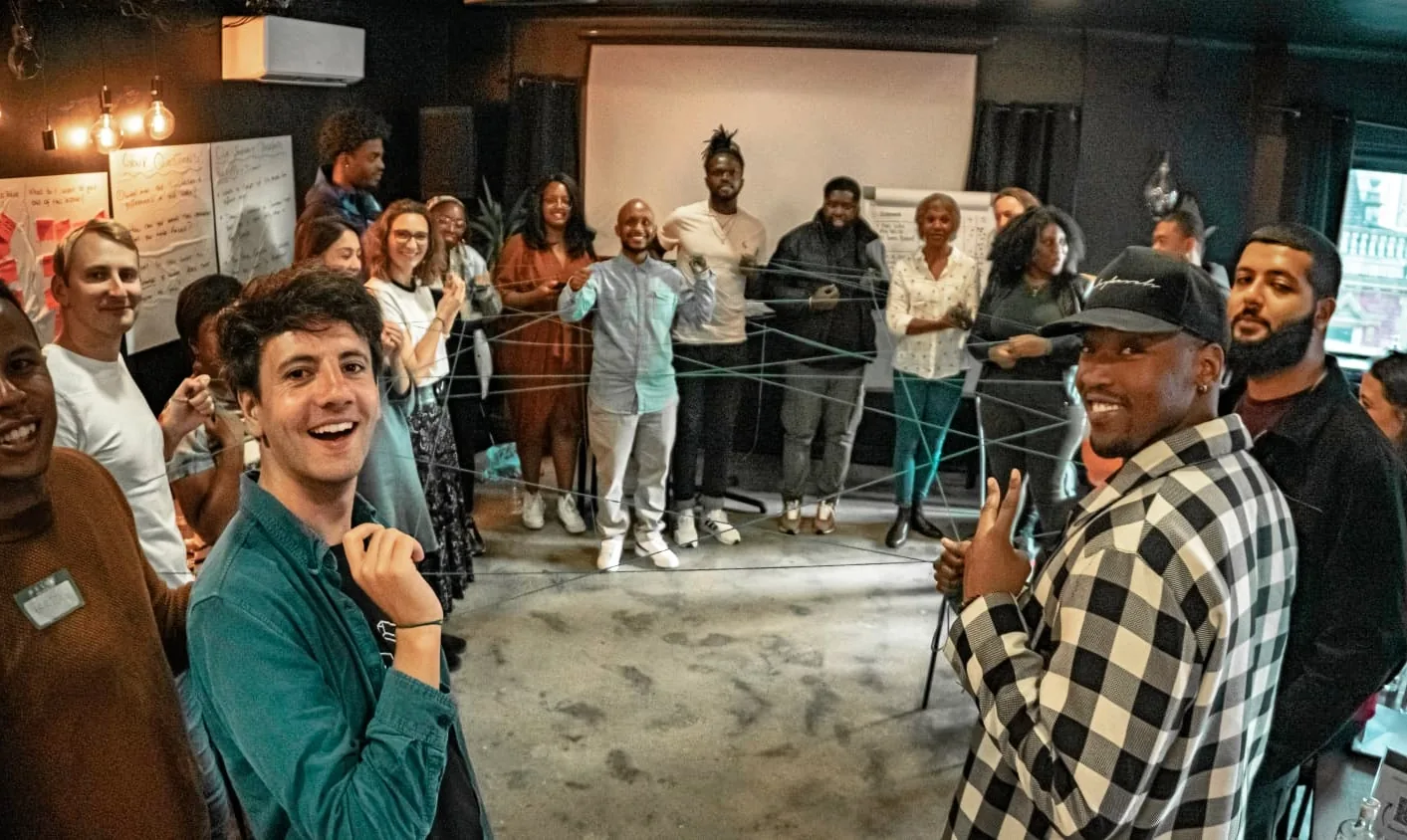
At Centric Community Research, where I began, community research was part of a grassroots movement for social and racial justice. In 2020 the pandemic widened the inequalities our communities already lived with, the murder of George Floyd pushed institutions to act, and for a time funding opened up for work led by Black and minoritised communities. We seized that moment to claim our space. Our Rebuilding Trust report set out the model: Centric “recruits residents, provides up-skilling, training and support, offers progression and, finally, research ownership”. Community researchers were paid, trained, named in every report as the Centric team that produced it, and given a route to leading the work.
Rebuilding Trust began before there was a project. We invited Southwark Council officers into our space to hear from our community researchers about their experiences of the council and the NHS, and what needed to change. John Gaventa calls this a claimed space, taken by less powerful people “from or against the power holders, or created more autonomously by them”. That session became a programme I designed, investing directly in the local community’s capability to deliver it from start to finish. Six Southwark residents, trained as community researchers, formed the project team and engaged around 70 residents. The findings went to Cabinet and informed the Joint Health and Wellbeing Strategy, and the council adopted the project’s definition of what it now calls “community empowerment”.

Across more than 20 projects, the same model:
- Built a workforce from the community45 community researchers at its peak, mentored and speaking more than eight languages, with a youth strand. Our directors and project managers, me included, all started as community researchers.
- Moved funders to back independenceImpact on Urban Health and Wellcome backed Centric’s incubation as an independent organisation, and Impact on Urban Health went on to fund the model’s development.
- Shifted NHS practiceinsight that NHS South East London names among the influences on its £1.5 million Black maternal care programme, a residents’ group that fed into a new chronic pain register for every GP practice in Lambeth, and the community research behind an NHS trust’s award-winning health inequalities programme.
- Changed how councils worka cost-of-living evaluation whose 19 recommendations Southwark accepted, bringing Somali and Afro-Latin groups into the pathway and increasing applications for support, and work that informed Lambeth’s £10 million cost-of-living programme.
- Crossed borderscommunity research capability built in Ghana and the Dominican Republic, funded from Centric’s own resources.
- Took the model to the fielda plenary at the 2023 UK and Ireland Implementation Science Conference, a guest presentation at Ireland’s Department of Justice Youth Diversion conference, and training commissioned by NIHR ARC South London.
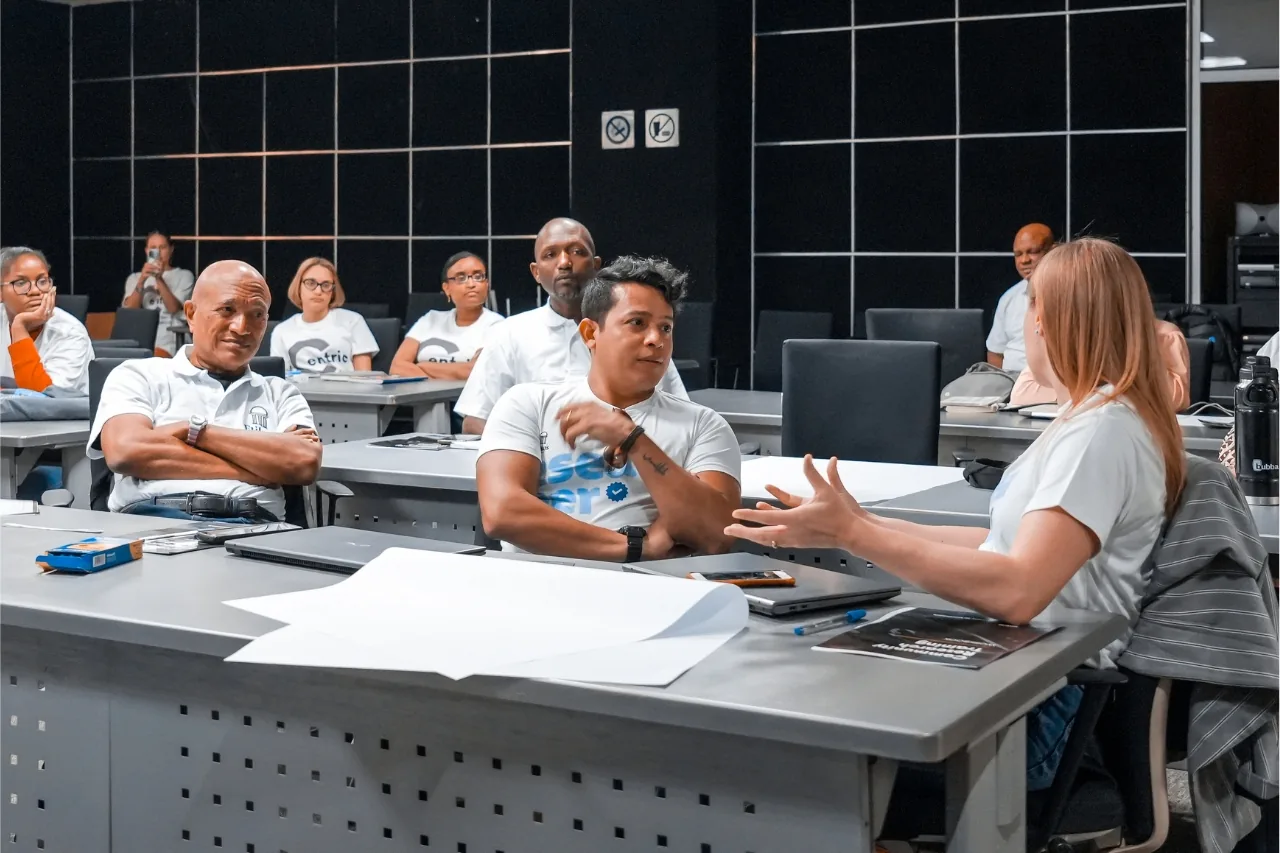
This is what community research produces when communities claim power. Communities moved from being the subject of research to leading it, and everyone around the table gained: residents got skills, paid work and routes into leadership, the NHS and councils got evidence they could act on, and funders’ money reached the communities it was for. The impact was tangible, and it lasted: a chronic pain register for every GP practice in Lambeth that residents helped shape, a definition of community empowerment Southwark adopted, and community researchers who went on to lead the work. That is the legacy, in the communities that need it most.
But that power lasted as long as each project did. It lived in contracts, relationships and people, and there was no infrastructure to carry it from one piece of work to the next. When the projects stopped, so did the funding, and with it the power. Claiming had won it. Keeping it needed infrastructure that did not yet exist.
What community research has become
Community research survived as a name. Today it covers community-led research, peer research and participatory action research. Much of that work is developed and hosted inside institutions whose systems, as the evidence above shows, were not designed to share power. The UK evidence shows what happens to it there.
- Communities do the fieldwork, and professional researchers keep the creditin half of the 42 UK projects that reported peer researchers’ roles, the Young Foundation found peer researchers “solely engaged in fieldwork”. A 2022 paper on what peer research contributes states: “Peer researchers were not involved in producing this paper”.
- The people closest to the problem are paid lastpayment and recognition were the barriers raised most often to the Co-Production Futures Inquiry in 2025, including “delays in processing payments”, casual contracts and “Lack of support for people in receipt of welfare benefits”. In one council’s research collaboration, 58% of peer and community researchers receive incentives as payment. One community researcher put it plainly: “I haven’t even been paid for the work that I did.”
- Nothing comes back“We keep being researched,” residents told one county’s 2023 listening exercise, and “no one hears the results. No one hears what’s going to change.” When the funding ends, as one peer researcher said, “People get activated and excited and then the money runs out.”
There is nothing to hold these practices to. When I set up Elysium London, I looked for a definition of community research to build on and found many, but none the field shares and none that takes a stance on power. Without one, the name travels without the power. So claiming power in research starts with claiming what community research means.
Defining community research
In An Elysium London Introduction, I defined community research as:
Research that starts from community experience and priorities, with people affected leading the research and deciding how resources are used.
It is the definition my experience and the evidence point to, and this essay is the case for it. The definition rests on six principles, drawn from my practice and from the traditions above:
- Communities set the questionsthe research starts from what communities say matters.
- Communities decide how resources are usedmoney sits with, or flows directly to, community organisations.
- Communities interpret and author the findingsthey decide what the evidence means and what is published, and they are named on the cover.
- Expertise comes in on communities’ termsacademic and other expertise supports the work and does not direct it.
- Progression is built inthose involved gain skills, paid roles and pathways that stay with them and their communities after the project.
- Findings go back and change somethingcommunities see what was done with what they shared, and the findings are acted on.
Definitions are where claiming power begins, so that is where I have started The Interspace Series, an open webinar series for everyone interested in this work.
Defining inclusive and community-centred research
Wednesday 11 November 2026, 2pm, online
Sign up for session oneInfrastructure that holds power
My position is this. Community research is how communities claim power in research, and what drives it is activism for social change. Freire argued that this power has to be won. Arnstein showed that shared power works when communities bring their own base, their own money and their own experts. Claiming is how communities win power. Infrastructure is how they keep it.
So community research has to be independent, with infrastructure that holds power when projects end. Much of it already exists in the voluntary and community sector: organisations that communities trust, with their own governance and their own reach. What research lacks is a steward, accountable to communities, to carry these principles as a standard across projects, institutions and funding cycles.
That means change at three levels:
Project
who holds the money, who sets the questions and whose names are on the cover.
Practice
the standard teams work to, so power does not drift from one study to the next.
System
how research is commissioned and governed, including the money now flowing into communities.
My work through Elysium London spans all three. At the level of the system, I am building The Inclusive Research Collaborative to steward that standard.
Closing thoughts
Every voice has power. I was reminded of how true that is at a recent event that brought together public sector stakeholders and community organisations.
As part of the session, we were asked to share the challenges we face as community members and organisations working to address inequalities. In that moment I felt the weight of responsibility: to speak to the harsh realities, not only my own or those of the people I have learned from and worked with, but of the people I grew up with, who bore the consequences of decisions that failed to address inequality and are not here to speak for themselves.
As Paulo Freire said, “Washing one’s hands of the conflict between the powerful and the powerless means to side with the powerful, not to be neutral.”
So I spoke plainly. I spoke about the pandemic and the murder of George Floyd, when funding shifted towards our communities, and about what followed when that attention faded: the gap between what the sector commits to in public and what it delivers in practice. I brought the evidence with me.
The moment stays with me, not because I spoke up, but because of what speaking up did. Afterwards, community members came up to share their own experiences, and the head of research for one of the organisations in the room came over to talk. People felt seen. What they lived with had been named in that room, with evidence the room could not dismiss.
It reminded me that using our voice is the first way we claim power.
Now that you have read this, how will you use yours?
Muhammed Rauf
Founder and Managing Director, Elysium London
A note on method: the 25 reports were found through public searches in September 2026. “Named as authors” means community researchers appear on the title-page author line or in the suggested citation. Being listed in a research team or in the acknowledgements was counted as named, not as authorship.